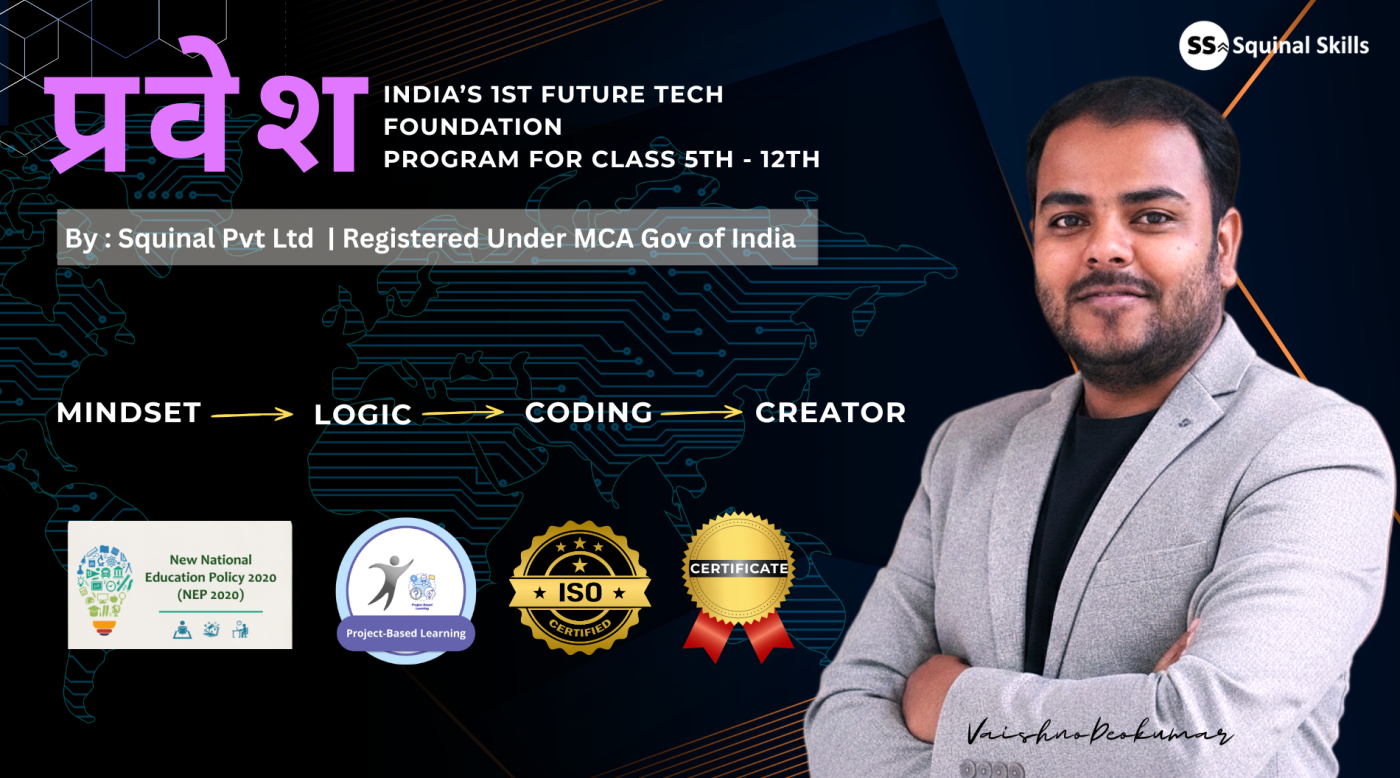

Future Tech Foundation Program - Pravesh
A structured future-tech learning program designed to help students develop strong logical thinking, practical coding ability, web application creation skills, and real digital confidence in the age of AI.
A structured future-tech learning journey designed to help students build practical digital understanding, logical thinking, coding confidence, and real web application creation ability.
Develop logical reasoning and problem-solving clarity before deep technical learning.
Move beyond theory and understand how real web-based systems are created step by step.
Follow a clear learning path from mindset and logic to coding and practical creation.
Build confidence with coding, modern digital systems, and practical AI awareness.
Lecture 1 :What is Technology in Real Life
00:22:47Lecture 2 : Fundamentals Of Computer & Future Evolution
00:17:33Lecture 3 : How Technology Solves Problems
00:15:01Lecture 4 : From Idea to Real Application Creator
00:35:22Lecture 5 : Concept of – Input, Process, Output
00:20:00Lecture 6 : How Computer Systems Work & Build New Technology
00:12:25Lecture 7 : From Consumer to Creator
00:09:00Module 1 : Test Paper Mindset Exercise
00:30:0Lecture 1 : What is Logical Thinking
Lecture 2 : Why Logical Thinking is Important
Lecture 3 : Understanding Problems Step by Step
Lecture 4 : Breaking Big Problems into Small Parts
Lecture 5 : Finding Patterns in Daily Life
Lecture 6 : Basic Approach to Problem Solving
Lecture 7 : Thinking Like a Programmer
Lecture 8 : Solving Simple Problems (Practice Session)
Lecture 9 : From Thinking to Solution (Real Examples)
Module 2 : Test Paper Logical Thinking Exercise
00:30:00Lecture 1 : Introduction to Programming and Python
Lecture 2 : Setting Up Python Environment
Lecture 3 : Writing Your First Python Program
Lecture 4 : Variables and Data Types
Lecture 5 : Taking Input from User
Test Paper (Quiz-1) : Python Basics
Lecture 6 : Output and Print Statements
Lecture 7 : Operators in Python
Lecture 8 : Conditional Statements (If, Else, Elif)
Lecture 9 : Loops in Python (For Loop)
Lecture 10 : Loops in Python (While Loop)
Test Paper (Quiz-2) : Conditions and Loops
Lecture 11 : Lists in Python
Lecture 12 : List Operations and Practice
Lecture 13 : Strings and String Operations
Lecture 14 : Working with Multiple Data Types
Test Paper (Quiz-3) : Data Handling
Lecture 15 : Introduction to Functions
Lecture 16 : Creating and Using Functions
Lecture 17 : Debugging Simple Python Errors
Lecture 18 : Logic Building with Python
Lecture 19 : Practice Session – Real Problems
Lecture 20 : Mini Project Using Python Basics
Lecture 21 : Final Revision Before Web Development
Test Paper (Quiz-4) : Python Fundamentals Mastery
Lecture 1 : What is Computational Thinking
Lecture 2 : Why Thinking is More Important Than Coding
Lecture 3 : Breaking Problems into Smaller Parts (Decomposition)
Lecture 4 : Recognizing Patterns in Problems
Test Paper (Quiz-1) : Computational Thinking Basics
Lecture 5 : Understanding Abstraction in Simple Way
Lecture 6 : Step-by-Step Problem Solving Method
Lecture 7 : Designing Solutions Before Coding
Lecture 8 : Introduction to Algorithms (Simple Way)
Test Paper (Quiz-2) : Problem Solving and Algorithms
Lecture 9 : Thinking Like a Developer
Lecture 10 : How Real Apps Are Built (SDLC Concept)
Lecture 11 : From Idea to Application (Real Example Flow)
Lecture 12 : Preparing for Web Development Thinking
Test Paper (Quiz-3) : Computational Thinking Mastery
Lecture 1 : Introduction to Web Development and HTML Basics
Lecture 2 : HTML Page Structure and Essential Tags
Lecture 3 : Working with Text, Links, Images and Lists in HTML
Lecture 4 : Forms, Tables and Semantic HTML Basics
Test Paper (Quiz-1) : HTML Basics
Lecture 5 : Introduction to CSS and Ways to Apply It
Lecture 6 : Colors, Fonts and Text Styling in CSS
Lecture 7 : Box Model, Margin, Padding and Border
Lecture 8 : Layout Design with Display, Flexbox and Position
Lecture 9 : Making Web Pages Responsive and Better Looking
Test Paper (Quiz-2) : CSS Basics
Lecture 10 : Building a Simple Web Page Using HTML and CSS
Lecture 11 : Introduction to JavaScript and Variables
Lecture 12 : Events, Conditions and Basic Page Interaction
Test Paper (Quiz-3) : HTML CSS and JavaScript Basics
Lecture 1 : Introduction to Django and Web Applications
Lecture 2 : Setting Up Django Environment and Project
Lecture 3 : Understanding Django Project and App Structure
Lecture 4 : Running Server and Creating First App
Lecture 5 : URL Routing and Page Flow in Django
Test Paper (Quiz-1) : Django Basics
Lecture 6 : Introduction to Models and Database Concept
Lecture 7 : Migrations and Database Table Creation
Lecture 8 : Admin Panel and Data Management
Lecture 9 : Views and Business Logic in Django
Lecture 10 : Templates and Dynamic Page Rendering
Lecture 11 : Model View and Template Flow in Django
Test Paper (Quiz-2) : Models Views and Templates
Lecture 12 : Static Files and Frontend Integration
Lecture 13 : Forms and User Input Handling
Lecture 14 : Connecting Forms with Backend Logic
Lecture 15 : MySQL Connection in Django
Lecture 16 : Authentication Basics (Login and Register)
Lecture 17 : CRUD Operations in Django
Lecture 18 : Error Handling and Debugging Basics
Test Paper (Quiz-3) : Django Core Concepts
Lecture 19 : Preparing for Real Project Development
Lecture 20 : Project 1 - Task Manager Application
Lecture 21 : Project 2 - Student Portfolio Website
Lecture 22 : Project 3 - Mini Learning Platform
Lecture 23 : How Frontend Backend and Database Work Together
Lecture 24 : How Real Web Applications Work in Industry
Lecture 25 : Final Review and Next Steps
Test Paper (Quiz-4) : Full Django Understanding
Lecture 1 : Introduction to Artificial Intelligence
Lecture 2 : How AI is Changing the Future
Lecture 3 : Understanding AI Tools in Daily Life
Lecture 4 : Using ChatGPT for Learning and Problem Solving
Lecture 5 : Using AI for Writing and Content Creation
Lecture 6 : Using AI for Coding and Development Help
Test Paper (Quiz-1) : AI Basics and Tools
Lecture 7 : Using AI for Study and Productivity
Lecture 8 : AI Tools for Image Video and Design
Lecture 9 : How to Use AI Responsibly and Smartly
Lecture 10 : Combining AI with Coding Skills
Test Paper (Quiz-2) : AI Tools Application
Lecture 11 : Future Career Opportunities in AI
Lecture 12 : How Students Can Stay Future Ready
Today, every parent understands one thing clearly — only school education is not enough for a student’s future. The world is changing fast, and technology is becoming a part of every career.
But the problem is, most students still learn outdated computer courses which do not build real skills. They learn theory, but they do not understand how technology actually works in real life.
Pravesh – Future Tech Foundation Program is designed to solve this gap.
This is not just a coding course. This is a complete foundation program where students learn how to think, understand technology, and gradually build real skills step by step.
By the end of this program, a student will not just “know coding”. They will understand how to build things using technology.
This program is not about fast results. It is about building a strong foundation which will help students in the coming years.
If a student starts learning in the right direction today, they will always stay ahead in the future.
No prior coding or technical knowledge required
Basic understanding of using mobile or computer
Laptop or desktop recommended for practice
Interest to learn step by step
Clear understanding of how technology works
Strong foundation in logic and coding
Ability to build basic websites and web applications
Confidence in using modern digital tools
Basic understanding of AI tools and usage
Clarity about future career direction
Technology is no longer optional — it is becoming the foundation of every career. From business to healthcare, education to startups, every industry now depends on digital systems, automation, and intelligent tools. With the rapid growth of Artificial Intelligence, the ability to understand and create technology is becoming a core life skill. Students and learners who develop logical thinking, system understanding, and creation skills early will have a strong advantage in the future. PRAVESH is a structured Future Tech Foundation Program designed to help learners build strong fundamentals in technology, problem-solving, and digital creation. This program focuses on: It is not just a course — it is a complete foundation journey into the tech world. 1️⃣ Structured Learning Path – Designed like an academic foundation program 1️⃣ Understand how technology works After completing this foundation program, learners can move towards: ✔ Minimum required progress in learning modules 📌 Certification validates both concept understanding and practical skills This is your silent targeting section (very powerful psychology) 👇 Students who start understanding technology early:
📌 Early exposure does not mean pressure —🌐 Why Future Tech Skills Are Important Today
💡 What is PRAVESH Program?
🧩 PRAVESH Program Curriculum Overview
Module Topics Covered Future Awareness & Tech Mindset Evolution of Technology, Problem-Solving Systems, Digital Thinking Logic & Problem Solving Logical Patterns, Flow Thinking, Real-Life Problem Mapping Internet, Data & Digital Systems Internet Basics, Data Types, Client-Server System, Cloud Concepts Programming Foundations Python Basics, Variables, Conditions, Loops, Logic Building Computational Thinking Breaking Problems, Step-by-Step Solutions, System Design Design Thinking User Thinking, Creativity, Problem-Solution Design Web Application Development Frontend Basics (UI), Backend Basics, System Flow, Real Application Building AI Tools & Future Technologies AI Tools Usage, Automation Concepts, Smart Systems Capstone Project Build a complete real-world web application project 📊 Program Details
Program Details Information Name of the Program Future Tech Foundation Program – PRAVESH Delivery Mode Pre-Recorded Structured Sessions Duration 5 – 6 Months Learning Format Guided Daily Learning (45–75 mins/day) Certification Yes Support Dashboard Support + Community Learning Assignments & Practice Yes Real Projects Yes (Web Application Based) Learning Structure Step-by-Step Progressive Modules 🎯 Key Benefits of PRAVESH Program
2️⃣ Real Creation Skills – Build real web applications, not just theory
3️⃣ Strong Concept Clarity – Focus on understanding, not memorization
4️⃣ Future Tech Exposure – Learn AI tools and modern digital systems
5️⃣ Logical Thinking Development – Core focus on problem-solving
6️⃣ Guided Learning System – Daily structured progress
7️⃣ Certification – Recognized completion certificate🚀 Learning Journey (Step-by-Step Growth)
2️⃣ Develop logical thinking
3️⃣ Learn programming basics
4️⃣ Understand system design
5️⃣ Build real web applications
6️⃣ Explore AI tools
7️⃣ Become a confident tech creator💼 Future Opportunities After PRAVESH
🎓 Certification Criteria
✔ Completion of assignments and practice tasks
✔ Successful submission of project work💰 Program Fees
🧠 Why Starting Early in Technology Matters
it means better understanding, better confidence, and better future readiness.
Buy Now
Students
183
language
Hindi
Duration
5-6 MonthsLevel
beginnerExpiry period
8 MonthsCertificate
Yes